
Psoriasis is a condition that affects 7.5 million people in the United States, and it is estimated that 3% of the world’s population has psoriasis. This August is Psoriasis Awareness Month – an annual holiday designed to educate the public about psoriasis and raise awareness about its causes, triggers, and treatments. To help promote this important cause, let’s take a look at everything you need to know about psoriasis and Psoriasis Awareness Month.
What is Psoriasis?
Psoriasis is a chronic skin condition that causes itchy, scaly patches that most commonly appear on the knees, elbows, trunk, and scalp. Psoriasis is a condition that tends to come and go in cycles, with symptoms flaring for a period of time before subsiding again. These psoriasis flares can be triggered by a number of factors, including infections, cuts and burns, and certain medications.
What Causes Psoriasis?
Psoriasis is a condition that occurs when the body replaces skin cells more quickly than it should. It’s still unknown exactly what causes this condition, but it’s thought that psoriasis is an immune disorder in the same family of conditions as rheumatoid arthritis and lupus. Psoriasis is also a genetic condition that can be passed down from generation to generation.
Types of Psoriasis
There are several different types of psoriasis, and each type has its own unique symptoms:
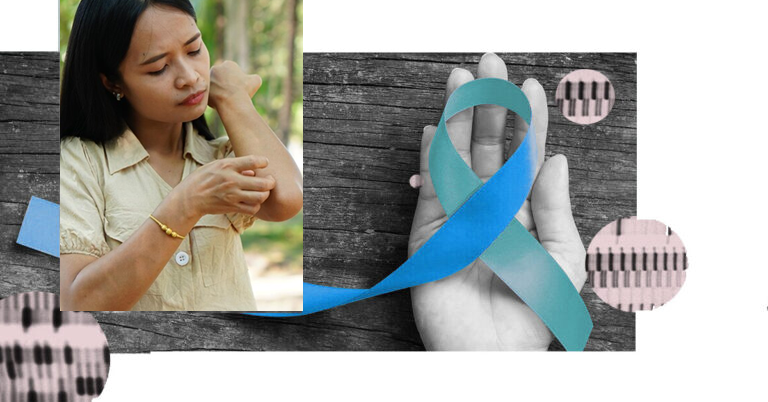
- Plaque psoriasis: The most common type of psoriasis, plaque psoriasis causes a dry, itchy, and scaly rash that appears in patches on the skin.
- Nail psoriasis: Nail psoriasis affects the fingernails and toenails, causing pitting, abnormal growth, and discoloration.
- Guttate psoriasis: Primarily affecting children and young adults and often triggered by bacterial infections such as strep throat, guttate psoriasis causes small, drop-shaped, scaling spots on the trunk, arms, or legs.
- Inverse psoriasis: Inverse psoriasis mainly affects the skin folds of the buttocks, groin, and breasts and is commonly triggered by fungal infections.
- Pustular psoriasis: Pustular psoriasis is a rare type of psoriasis that causes pus-filled blisters to form either in widespread patches or small areas on the hands and soles.
- Erythrodermic psoriasis: The rarest type of psoriasis, erythrodermic psoriasis can cover the entire body with a peeling rash that often itches or burns intensely. Erythrodermic psoriasis can be either chronic or acute.
Treatments for Psoriasis
In most cases, psoriasis is a chronic condition, meaning that it never goes away. There is also no known cure for psoriasis. Thankfully, though, there are a number of treatments that can alleviate psoriasis symptoms and make it much easier to live with the condition.
Topical therapy is the most common type of treatment for psoriasis. Topical medications such as corticosteroids and calcineurin inhibitors can help soothe rashes and prevent scaly buildup. Other topical medications such as anthralin are able to mitigate psoriasis symptoms by slowing skin cell growth.
Light therapy is another treatment commonly prescribed to psoriasis patients and involves exposing the affected area of skin to controlled amounts of natural or artificial light. There are also a number of oral and injected medications that are sometimes prescribed for moderate to severe cases of psoriasis, including medications such as cyclosporine, methotrexate, and triamcinolone.
The Goal of Psoriasis Awareness Month
There might not be a cure for psoriasis, but there are plenty of treatments that can alleviate its symptoms. Likewise, avoiding certain triggers can also help prevent flare ups and make psoriasis easier to manage.The goal of Psoriasis Awareness Month, therefore, is mainly to raise awareness about these treatments and triggers so that those suffering from psoriasis will be able to seek out the help that they need. At Bikham Healthcare, this is a cause that we are proud to promote, and we hope that all of our readers who are affected by this condition are able to find relief.
