
What we’ve known about COVID-19 for quite some time is the fact that it affects everyone differently. It has been observed that certain groups such as the elderly and those with pre-existing medical conditions are more likely to develop serious symptoms than others.
Another group that faces an elevated risk of severe illness are women who contract COVID-19 while they are pregnant. Along with an elevated risk of severe symptoms, pregnant women who contract COVID-19 are also at a higher risk of delivering a preterm or stillborn infant. In some cases, the SARS-CoV-2 virus responsible for causing COVID-19 can be spread through the placenta as well, infecting an unborn infant with the disease.
Fortunately, COVID-19 vaccines can dramatically reduce all of these risks. The specific vaccine and the timing in which it is administered can both have a big impact on how much protection vaccination offers to pregnant women and their unborn children.
Which COVID-19 Vaccine Offers the Most Protection During Pregnancy?
If you are thinking about getting vaccinated against COVID-19, you have multiple vaccines to choose from, including Johnson & Johnson’s adenovirus-based vaccine and the mRNA-based vaccines from Moderna and Pfizer-BioNTech. Each of these vaccines has been proven safe and effective at preventing severe cases of COVID-19. According to researchers at Harvard Medical School and Brigham and Women’s Hospital, though, one of these vaccines is a better choice for pregnant women than the other two.
In a study that examined 158 pregnant women who had received one of the three above-mentioned COVID-19 vaccines, researchers found that women who received either the Moderna or Pfizer-BioNTech produced more SARS-CoV-2-specific antibodies than those who received the Johnson & Johnson vaccine. The study also found that the mRNA vaccines were more effective at transferring antibodies to the fetus through the placenta. When comparing the two mRNA vaccines to one another, the Moderna vaccine was found to provide subtle advantages compared to the Pfizer-BioNTech vaccine.
When During Pregnancy is the Best Time to Get a COVID-19 Vaccine?
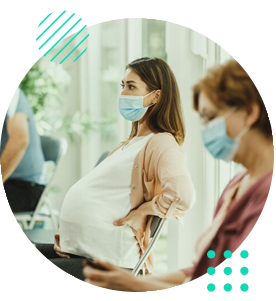
In addition to studying which vaccine was most effective at both producing SARS-CoV-2-specific antibodies and transferring those antibodies to the fetus, researchers also examined the effectiveness of COVID-19 vaccines based on when they were administered.
The study found that women who were vaccinated during either the first or third trimester of pregnancy exhibited an enhanced immune response compared to those who were vaccinated during the third trimester. However, more SARS-CoV-2-specific antibodies are transferred to the fetus through the placenta most efficiently when the vaccine is administered during the first and second trimesters.
What to Make of These Findings
In summary, taking the Moderna vaccine during the second trimester of pregnancy will offer the most protection to mother and unborn child alike. However, that doesn’t necessarily mean that you should put off taking the vaccine until your second trimester of pregnancy; contracting COVID without being vaccinated because you were putting it off until the ideal time is a risk that is not worth the potential benefit.
Researchers also caution that more studies are necessary before any hard conclusions can be drawn, with the study’s co-senior author Kathryn Gray stating that, “Additional studies are needed to understand how to optimize maternal and neonatal immunity induced by vaccines in general during pregnancy.”
Nevertheless, these findings are still beneficial as we continue to grapple with COVID-19 and work toward more effective ways to both treat and prevent it. Perhaps the biggest takeaway from this study should be that all three vaccines are effective at protecting both a pregnant mother and her child no matter when they are taken. Regardless of how far along you are in your pregnancy and which vaccine you choose, getting vaccinated against COVID-19 is one of the best choices you can make for your health and the health of your fetus.